
Is Your Child’s Vision Getting Worse Every Year? A Parent’s Guide to Myopia Control in Orange, CA
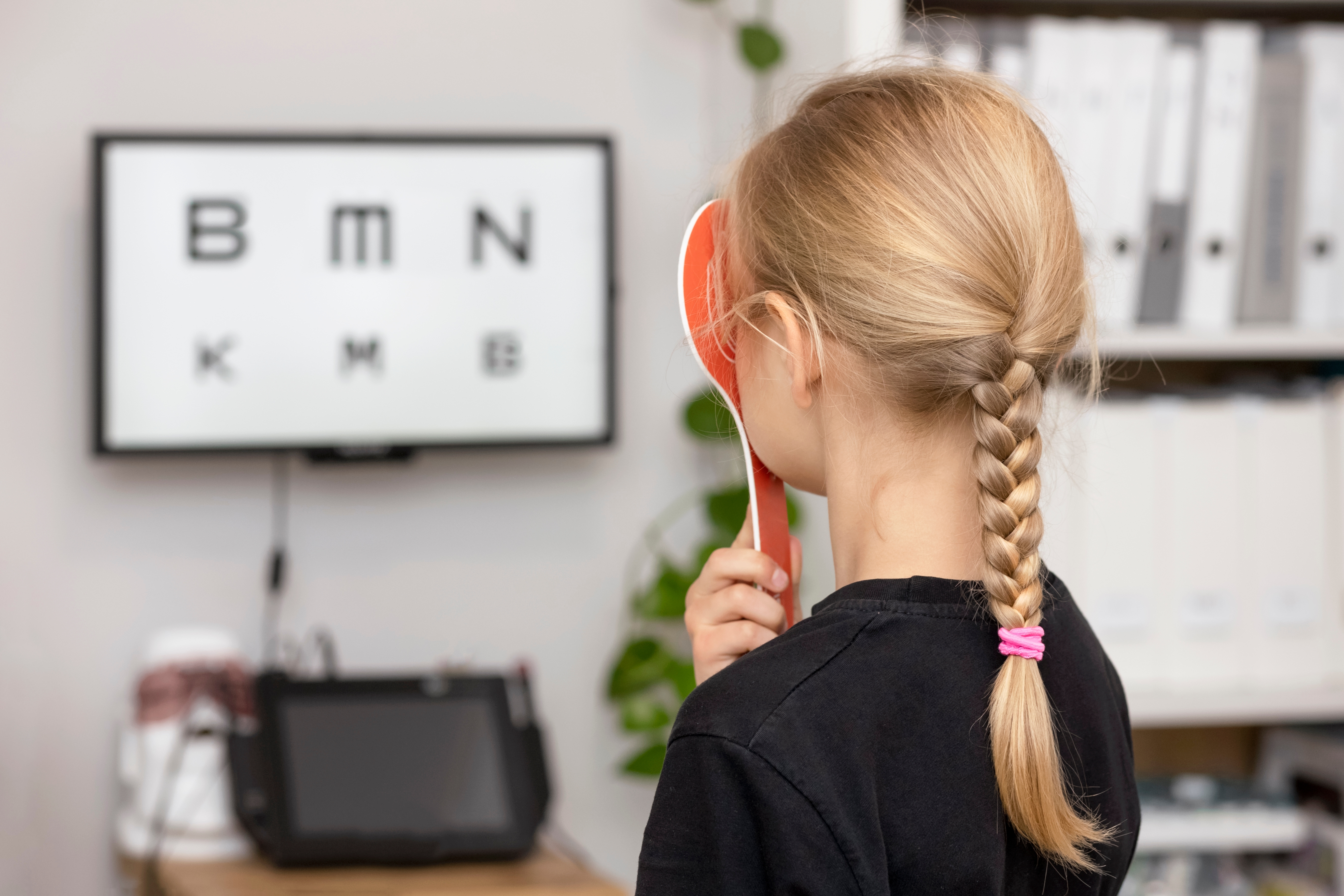
If your child seems to need stronger glasses at every eye exam, myopia may be progressing. Myopia, or nearsightedness, causes distant objects to appear blurry while close-up vision is clearer. It often begins during childhood and can continue to worsen as the eyes grow.
While updating a glasses prescription can provide clearer vision, myopia control takes a different approach. The goal is to help slow the progression of nearsightedness over time and support your child’s long-term eye health.
Why Does My Child’s Myopia Keep Getting Worse?
Myopia commonly progresses as a child grows because the eye may become longer than normal from front to back. When this happens, light focuses in front of the retina instead of directly on it, causing blurry distance vision.
Genetics can play a role, especially when one or both parents are nearsighted. Lifestyle factors may also be associated with myopia development and progression. Children today often spend significant amounts of time reading, completing schoolwork, and using digital devices while spending less time outdoors.
Regular eye exams in Orange, CA allow us to monitor prescription changes and identify signs that myopia is progressing.
Signs Your Child’s Nearsightedness May Be Progressing
Some children do not realize their vision has changed. Parents may notice behaviors such as:
- Squinting to see the board, television, or distant signs
- Sitting closer to the television or moving closer to the classroom board
- Complaining that distant objects look blurry
- Experiencing frequent eye strain or headaches
- Needing stronger eyeglass prescriptions from year to year
A comprehensive eye exam can determine whether these symptoms are related to myopia or another vision concern.
What Is Myopia Control?
Traditional glasses and contact lenses correct blurry vision, but certain myopia control strategies are designed to address how quickly nearsightedness progresses.
Depending on a child’s age, prescription, eye health, and lifestyle, different approaches may be considered. Specialized contact lenses are one option used in myopia management. Certain rigid gas permeable lenses, for example, may be recommended for younger patients to help curb the progression of nearsightedness.
The right approach is not the same for every child. Careful evaluation and ongoing monitoring help determine whether a myopia control option is appropriate and whether adjustments are needed over time.
Why Slowing Myopia Progression Matters
Managing myopia is about more than reducing how frequently a child needs stronger glasses. Higher levels of myopia are associated with an increased lifetime risk of certain eye health problems.
Starting myopia management while the eyes are still developing may help reduce how severe nearsightedness becomes. That is why parents in Orange should not assume yearly prescription increases are simply something their child has to accept.
Regular Eye Exams Help Us Track Changes
Children’s vision can change quickly, particularly during periods of growth. Routine comprehensive eye exams allow us to compare prescriptions, evaluate eye health, and monitor changes over time.
If your child has already been diagnosed with nearsightedness, regular follow-up visits are especially important. By tracking progression instead of simply responding when vision becomes noticeably blurry, we can make more informed recommendations for their changing visual needs.
If your child’s eyeglass prescription keeps getting stronger, schedule an eye exam with Sandra L Stevens, O.D. in Orange, CA to discuss myopia control and your child’s long-term vision needs at 714-997-1091.


- Monday 9:00am - 7:00pm
- Tuesday 8:30am - 5:00pm
- Wednesday 8:30am - 5:00pm
- Thursday 9:00am - 5:00pm
- Friday 9:00am - 5:00pm
- Saturday 8:00am - 2:00pm
- Sunday Closed
© 2026 Sandra L Stevens, O.D. . All rights Reserved. Accessibility Statement - Privacy Policy - Sitemap
Powered by:
